
A one-person software team—that does not work alone
One person can direct an agent system capable of covering many functions of a software team. That does not remove work or collaboration: it makes context, roles, quality controls and boundaries explicit.
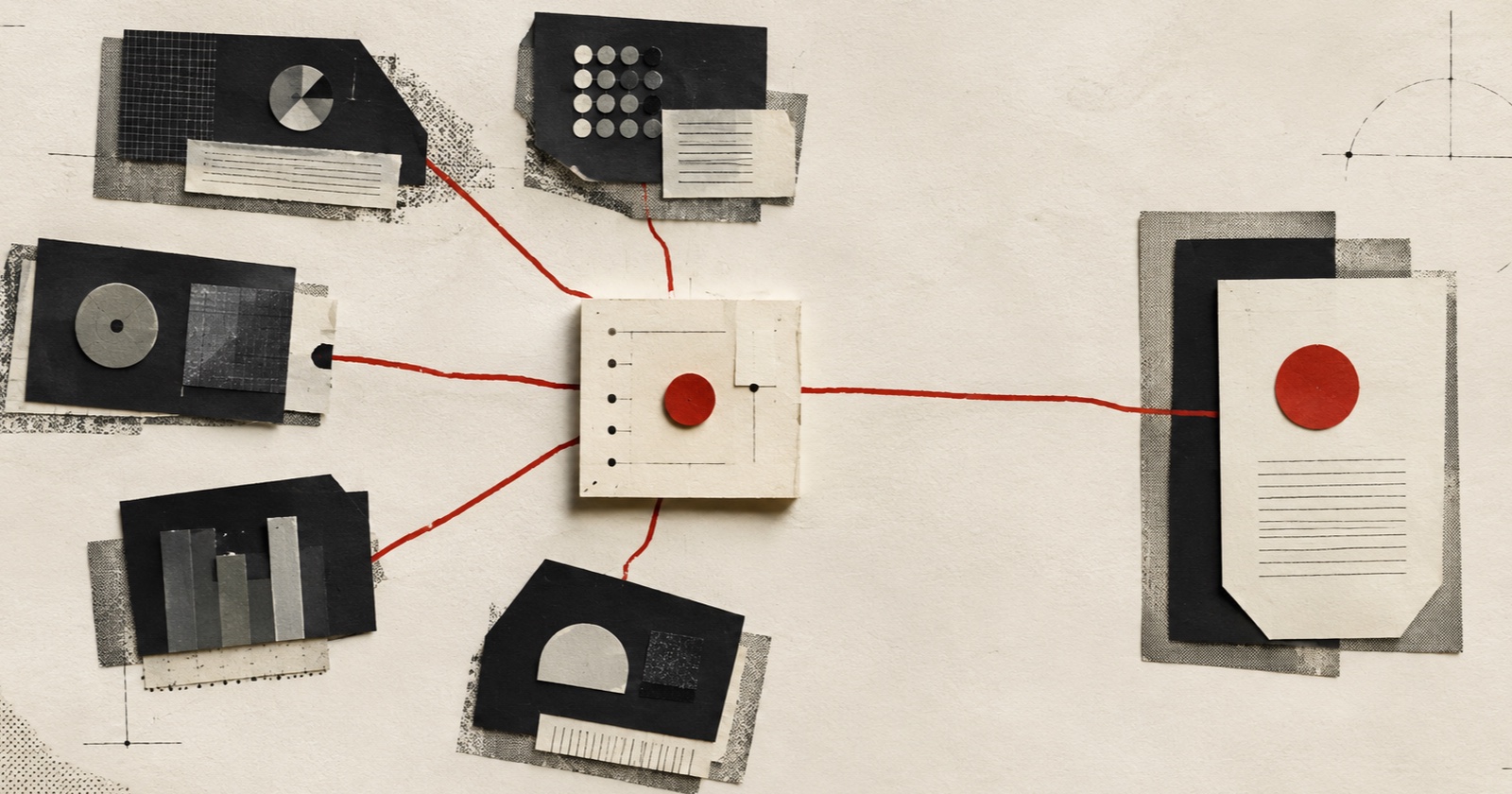
I have used a one-person agentic team to develop a large-scale SaaS project in the energy sector. The phrase sounds paradoxical because it combines two ideas we usually separate: one person and a complete team.
The important part is the nuance: one person did not do all the work alone. One person directed a system made up of specialist agents, tools, automations, external services and points of human collaboration.
The team does not disappear; it changes shape
In a traditional team, we distribute responsibilities across product, architecture, development, quality, security, operations and design. In an agentic system, those perspectives are still needed. What changes is who—or what—does part of the exploration and execution.
One agent can research a technical option. Another can implement a bounded piece. Another can review changes, generate tests or compare the result against defined criteria. The person maintains the overall model: purpose, architecture, priorities, risk and acceptance.
Thinking of it as an orchestra helps. The conductor does not play every instrument at the same time, but must know the score, recognise when something does not fit and make every contribution part of a coherent work.
Context is the real multiplier
Asking five agents to write code without a shared system does not create a team. It creates five sources of variation. To collaborate, they need a common foundation:
- Product objective and boundaries.
- Architecture and decisions already made.
- Implementation conventions.
- Contracts between components.
- Tests and acceptance criteria.
- Reproducible environments.
- A way to record what changed and why.
In a human team, much of that information circulates through conversation and collective memory. With agents, it has to become accessible, precise and maintained artefacts. That discipline also benefits people who join later.
Speed increases the need for control
When changes become cheap to create, review can become the bottleneck. Accepting everything that compiles is not enough. The system needs automated tests, static analysis, validation environments, observability and reviews proportional to risk.
It also needs boundaries: what an agent may modify, what requires approval, how much it may spend, which data it may use and when it must stop. Autonomy without boundaries is not capability; it is future operational debt.
What one person still cannot replace
Some knowledge is not in the repository: the client’s reality, the political consequences of a decision, operational experience, user needs and legal limits. A small agentic team must connect with specialists and business owners instead of pretending to be self-sufficient.
That is why “one person” describes the permanent core of direction, not the entire universe of collaborators. The human network activates when a challenge requires specific expertise.
A new possibility, not a universal recipe
This model works best when the objective is clear, the work can be divided, quality is observable and one person can maintain the technical and product vision. It is not suitable for every domain and does not automatically turn one person into an expert in everything.
The interesting part is not shrinking an organisation chart. It is making viable a class of product that previously could not justify the cost and coordination of a permanent team.
Sources and references
- OpenAI’s practical guide to building agents.
- Primary source: Victor’s experience building a SaaS product through an agentic system.